
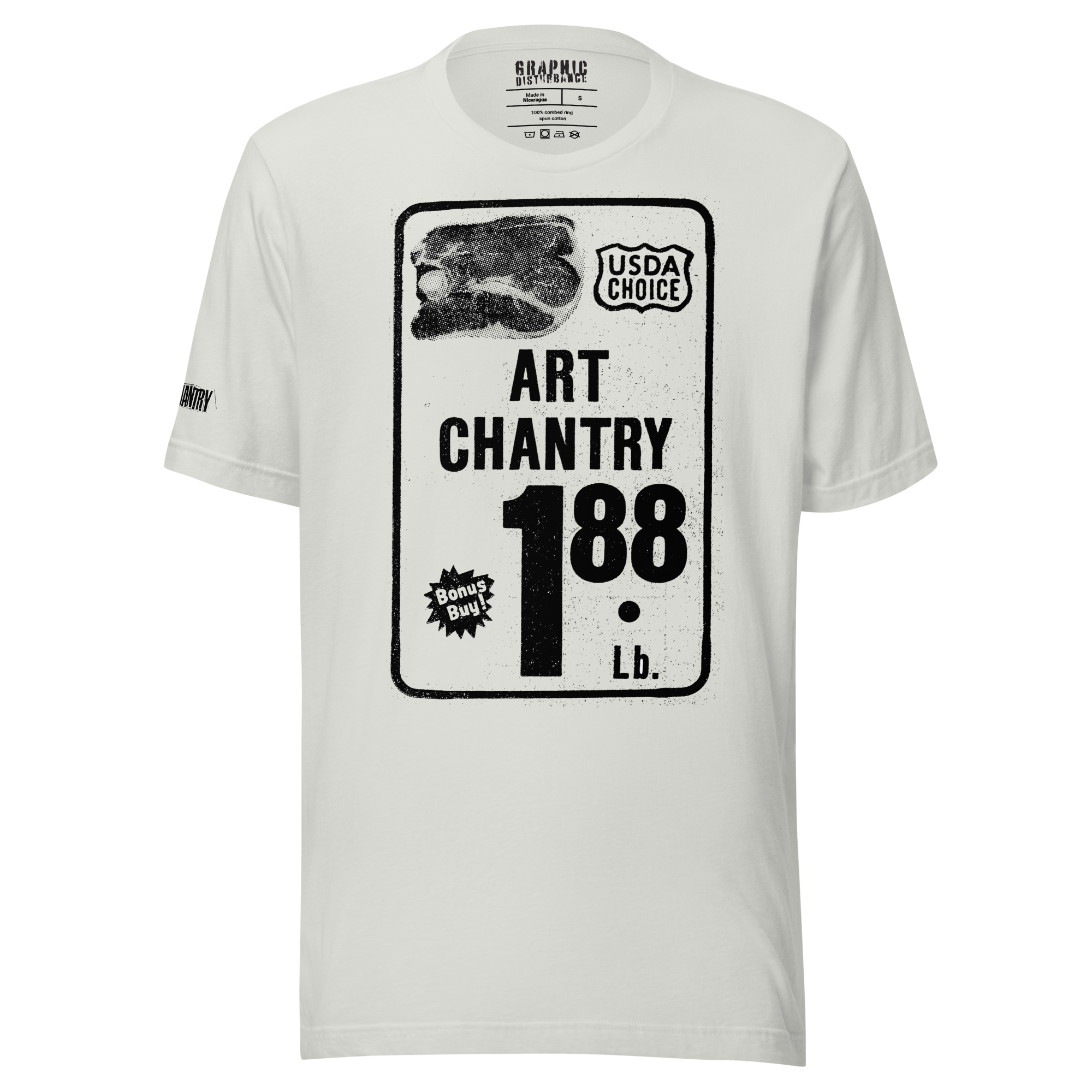
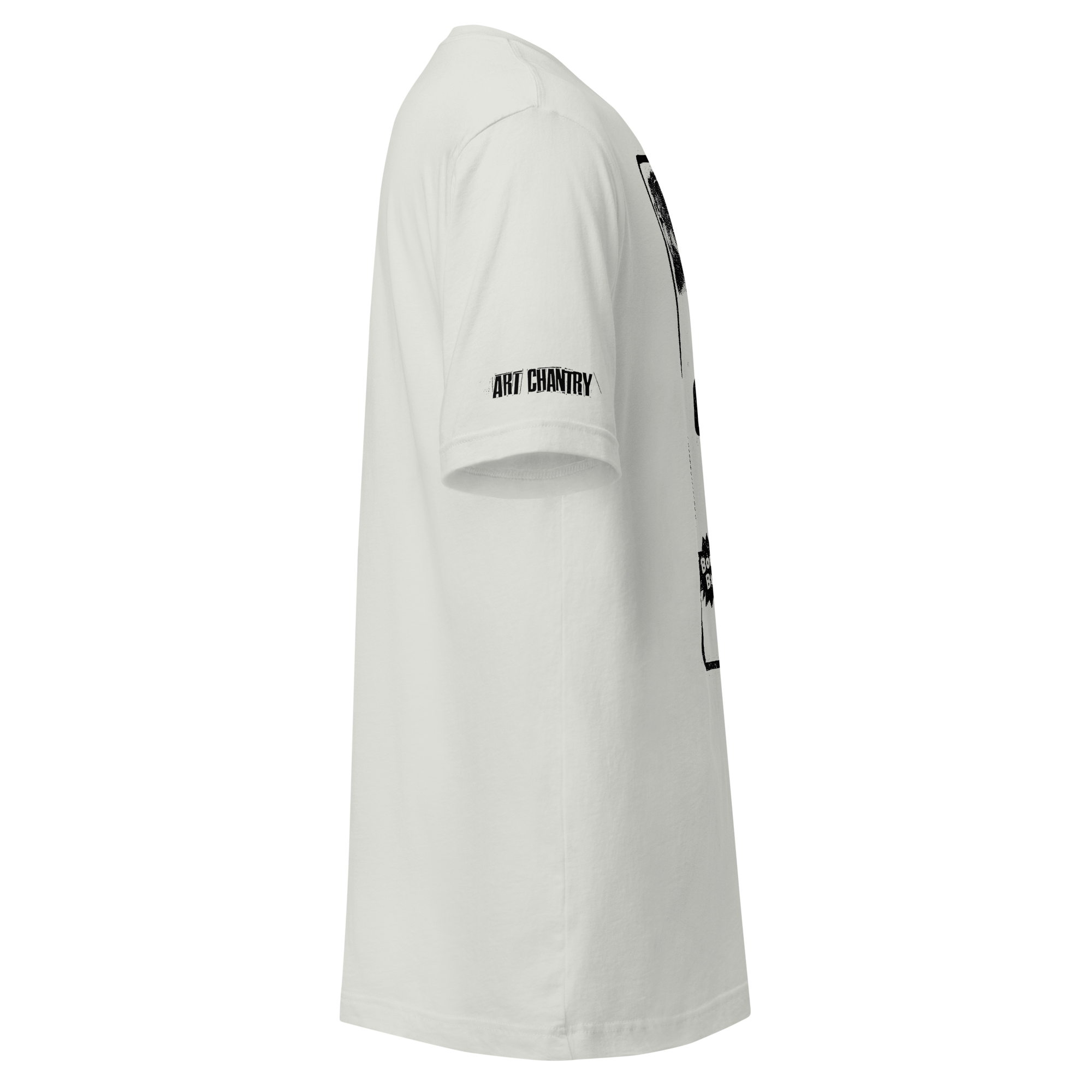
Chantry designed this ad for himself, poking fun at the idea that being a graphic designer means ‘selling yourself’ as if you’re a piece of meat in a supermarket. Which isn’t entirely untrue, if you’ve ever had a client tell you to ‘make the logo bigger’, because after all, they are the ones writing the check in 90 days (or so you hope). For this iconic T only one color is offered, newsprint (silver in the store), because that is where the inspiration comes from. Want another color? Sorry, that would not be on brand. Chantry would agree.
BELLA+CANVAS TSHIRT SPECS: 100% combed and ring-spun cotton (Heather colors contain polyester) • Fabric weight: 4.2 oz./yd.² (142 g/m²) • Pre-shrunk fabric • Side-seamed construction • Shoulder-to-shoulder taping • Blank product sourced from Nicaragua, Mexico, Honduras, or the US • DISCLAIMER: The fabric is slightly sheer and may appear see-through, especially in lighter colors or under certain lighting conditions.
Chantry designed this ad for himself, poking fun at the idea that being a graphic designer means ‘selling yourself’ as if you’re a piece of meat in a supermarket. Which isn’t entirely untrue, if you’ve ever had a client tell you to ‘make the logo bigger’, because after all, they are the ones writing the check in 90 days (or so you hope). For this iconic T only one color is offered, newsprint (silver in the store), because that is where the inspiration comes from. Want another color? Sorry, that would not be on brand. Chantry would agree.
BELLA+CANVAS TSHIRT SPECS: 100% combed and ring-spun cotton (Heather colors contain polyester) • Fabric weight: 4.2 oz./yd.² (142 g/m²) • Pre-shrunk fabric • Side-seamed construction • Shoulder-to-shoulder taping • Blank product sourced from Nicaragua, Mexico, Honduras, or the US • DISCLAIMER: The fabric is slightly sheer and may appear see-through, especially in lighter colors or under certain lighting conditions.